
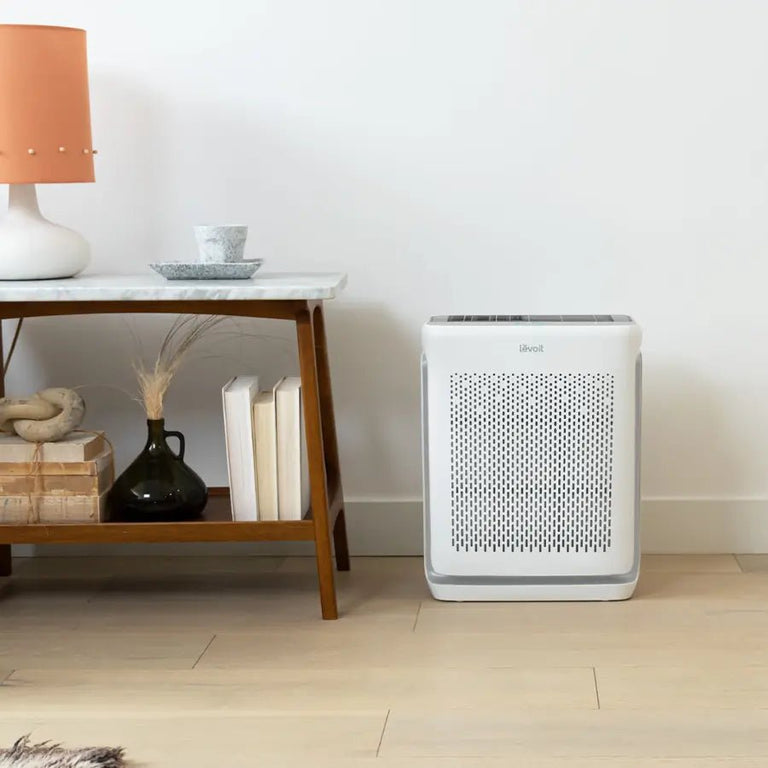
Direct answer: Use the exact model guidance, installation date, airflow, dust load, odor breakthrough, and filter availability to build a realistic replacement routine. Do not wait for a universal color or calendar rule. Record when the filter was installed, monitor airflow and noise, and keep a replacement available before the current cartridge reaches the end of its useful life.
There is no universal replacement interval for every model and room.
Hours, dust, pets, smoke, and filter design change the maintenance load.
A visibly dirty filter is not the only signal; restricted airflow matters too.
Buy the exact replacement code and plan ahead.
| Question | Practical answer |
|---|---|
| Manufacturer interval | The starting point for the exact model. |
| Reduced airflow | The filter may be loaded or the intake may be obstructed. |
| Persistent odor | Carbon media may be saturated or the source may continue. |
| High dust or pet load | The pre-filter and main filter may need attention sooner. |
What is the short answer?
Change a disposable purifier filter according to the exact model’s current instructions, then adjust your attention to actual use. A bedroom purifier in a low-dust home may load differently from a living-room unit used around pets, cooking, renovation dust, or wildfire smoke.
Do not wait for a universal color or calendar rule. Record when the filter was installed, monitor airflow and noise, and keep a replacement available before the current cartridge reaches the end of its useful life.
Why do replacement intervals vary?

Filter life depends on how much air the unit processes and how many particles are in that air. Fan speed, run time, room dust, pets, smoke, candles, construction, and open windows can all change the load. A filter that looks acceptable from the outside may still have reduced airflow, while a dusty pre-filter may be the first maintenance task.
Manufacturer guidance is the baseline because it is tied to the model’s design. Use it together with the operating pattern rather than replacing on a random schedule copied from another purifier. If the manual says a component is washable, follow those instructions; otherwise treat it as disposable.
What should you inspect in the filter system?
Many systems include a pre-filter, a particle filter, and sometimes carbon. Clean or inspect only the component the manufacturer identifies as serviceable. Check seals, the filter door, sensor openings, and the intake grille. A gap or mis-seated filter can reduce performance even when the cartridge is new.
When you open the unit, avoid shaking captured dust through the room. Use the method in the manual, keep the unit unplugged when required, and do not use water on a cartridge that is not designed for it.
Which signs deserve attention?
Reduced airflow, a new rattling sound, persistent odor, a filter alert, or a visibly loaded pre-filter may indicate that the system needs maintenance. None is a perfect diagnostic on its own. A sensor reading may show a trend but should not override the manual or a safety concern.
If the purifier has been exposed to heavy smoke, renovation dust, or a strong odor source, plan for earlier inspection. The correct response may be a filter change, a pre-filter cleaning, better source control, or a placement adjustment.
How do you plan the ownership cost?
Before buying, find the exact replacement filter code and at least one reputable seller. Note the price, availability, delivery time, and whether the model uses a proprietary cartridge. A low-cost purifier with an expensive or unavailable filter may be a poor long-term fit.
Set a calendar reminder for the manufacturer’s interval, but treat it as a prompt to inspect rather than an automatic proof that the filter is finished. Keep a simple log of dates, room, fan schedule, and unusual events.
What does a safe replacement routine look like?
Unplug the unit when the manual says to do so. Open the filter compartment, confirm the code and orientation, inspect the seal, and reset the indicator only after the new filter is installed. Dispose of the old cartridge according to local guidance and wash your hands after handling dusty media.
After replacement, check that airflow returns, the cover closes correctly, and the unit runs without new vibration or smell. If something does not fit or the machine behaves differently, stop and verify the model-specific instructions.


What should you verify in practice?
Before buying or changing a setup, write down the room, the main concern, the operating schedule, and the result you are trying to improve. This simple record prevents a product page from becoming the entire decision. It also makes later troubleshooting easier because you can separate a room problem from a machine problem. If the purifier is moved, the door position changes, or a new source appears, note the change instead of treating the result as a permanent product verdict.
Check the current manufacturer manual, not only a retailer listing. Look for the exact model number, filter code, room assumptions, clearance instructions, sound information, control behavior, and replacement guidance. Product pages can change and marketplace listings can combine several variants under one title. A model-specific manual is the safer reference for installation and maintenance. If the manual is unavailable, treat that as a buying concern rather than filling the gap with a guess.
Separate what can be observed from what needs a controlled measurement. A quieter room, less visible dust, or a different smell may be useful household observations, but they do not prove that every pollutant has been removed. Consumer sensors can show trends and may be useful for troubleshooting, but they are not automatically a laboratory instrument. For health-related questions, keep the site’s guidance general and speak with a qualified professional about symptoms, diagnosis, or treatment.
Keep ownership in the calculation. A purifier that is difficult to place, noisy at the required setting, or expensive to maintain may not be a good fit even when its headline specification looks strong. Confirm that the replacement filter is available, that the power cord and controls suit the room, and that the device can run without blocking a walkway or creating a trip hazard. A sustainable routine is more valuable than an impressive specification that goes unused.
Finally, revisit the setup after the first maintenance cycle. Inspect the intake, filter condition, airflow, sound, and the source of the original concern. If the result is disappointing, test one change at a time: move the unit, change the operating schedule, address the source, or replace the filter when instructed. Do not silently convert an unverified household observation into a universal ranking. The responsible conclusion may be that the room needs a different intervention, a different size, or professional advice.
A useful final check is to compare the decision with the room you can actually maintain. Record the date, model, filter code, operating setting, placement, and any relevant source event. Recheck the same fields after a week and again after the first maintenance cycle. This does not create a laboratory result, but it creates a more honest ownership record and makes it easier to ask a manufacturer or qualified professional a precise question. It also keeps the review grounded: a product can be a reasonable fit for one room and routine while being a poor fit for another.
What questions do people ask most?
Can I wash a HEPA filter?
Usually not. Only wash a component when the exact manufacturer instructions identify it as washable.
What happens if I do not change the filter?
Airflow may fall, noise may change, and the unit may become less useful. The result depends on the model and dust load.
Can I vacuum a filter?
Only if the manufacturer says it is safe. A washable pre-filter is different from a disposable primary filter.
How do I know which replacement filter to buy?
Use the exact model and filter code from the manual or manufacturer, not only a similar-looking listing.
Should smoke exposure shorten filter life?
It can increase the particle and odor load, so inspect the filter sooner and follow current manufacturer guidance.
Which sources help verify this?
Use these first-party sources to verify the general guidance. Product specifications, prices, availability, and safety instructions still need model-specific checking.