
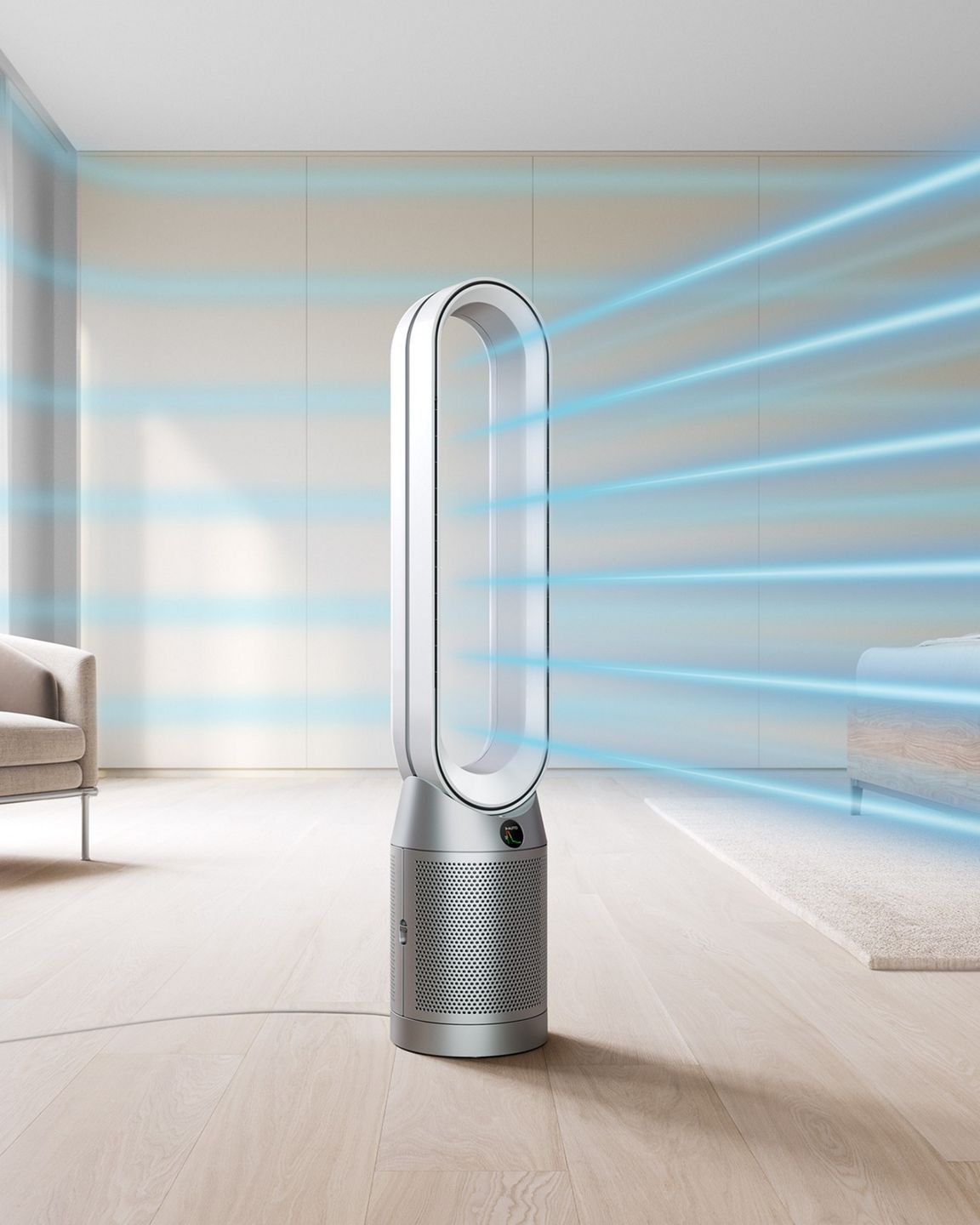
Direct answer: Compare particle filtration and odor-focused media without treating either one as a universal indoor-air solution. The right question is not “Which filter is better?” It is “What is the main problem in this room, and does the complete unit have a credible way to address it?” Dust and pollen call for particle-focused filtration. Cooking smells or some smoke odors may justify carbon, but source control and ventilation still matter.
HEPA-style media and activated carbon address different pollutant categories.
A thick carbon bed is not the same as a thin carbon-coated sheet.
Airflow, contact time, and source control shape real-world odor results.
A filter label should be checked alongside the complete product design.
| Question | Practical answer |
|---|---|
| Is HEPA better than carbon? | Neither is universally better. HEPA-style media target particles; carbon targets some gases and odors. Many rooms benefit from a combination, but the complete unit still matters. |
| Does more carbon always mean better odor control? | More usable carbon can help, but performance also depends on the compound, contact time, airflow, humidity, and continuing source. |
| Can carbon remove smoke? | Carbon may help with some smoke-related gases and odors, while a mechanical particle filter addresses smoke particles. Ventilation and source control remain important. |
| Can I wash a carbon filter? | Usually no. Follow the exact manufacturer instructions for the cartridge. |
What is the short answer?
HEPA-style particle filters and activated carbon filters do different jobs. A mechanical filter is designed to capture particles as air passes through it. Activated carbon is a sorbent material that may reduce some odors and gases when there is enough usable media and enough contact time.
The right question is not “Which filter is better?” It is “What is the main problem in this room, and does the complete unit have a credible way to address it?” Dust and pollen call for particle-focused filtration. Cooking smells or some smoke odors may justify carbon, but source control and ventilation still matter.
How do particle filters work?

Mechanical filters use a fibrous structure that intercepts and captures particles through several physical mechanisms. The performance of a portable unit depends on the filter, the airflow through it, sealing, and how much room air reaches the intake. A filter claim without an appropriate fan and usable room circulation is incomplete.
Particle filtration is also not a single “allergy” switch. Pollen, dander, dust, and smoke can behave differently depending on size, humidity, resuspension, and how quickly new particles enter the room. A unit can still be helpful while not removing every particle or preventing exposure at the source.
How does carbon media work?
Activated carbon has a high internal surface area that can adsorb some compounds. The result depends on the compound, the carbon amount, the bed depth, humidity, airflow, and whether the source continues to emit. A thin carbon sheet may offer convenience and some odor support, but it should not automatically be treated as equivalent to a heavier carbon canister.
This is why odor claims are hard to compare from a product page alone. Look for the type and amount of carbon, the manufacturer’s stated target, replacement guidance, and independent evidence when available. If a room has a persistent odor source, removing or ventilating the source generally produces a larger and more durable improvement than adding a small carbon layer.
How do you choose the right combination?
For general room particles, prioritize a credible particle filter, adequate airflow, clear intake and exhaust, and a replacement routine. For odor-focused use, look for a unit that clearly describes its carbon stage and then confirm that the filter is available at a manageable cost. For smoke, think about both particles and gases, not just the word “smoke” on a box.
If you are comparing two combination filters, do not infer performance from the number of stages. Compare the physical filter size, fan output, CADR or equivalent data, operating noise, and the exact replacement cartridge. The simplest system you can maintain is often more useful than a more elaborate system with expensive or hard-to-find replacements.
How do maintenance and filter life interact?
Particle filters load with dust and may restrict airflow as they become dirty. Carbon media can become saturated, and the point at which odor performance drops may not be obvious from appearance. Use the model’s instructions, keep notes on installation dates, and treat unusual odor breakthrough or reduced airflow as a reason to inspect the unit.
Never wash a disposable particle or carbon cartridge unless the manufacturer explicitly says it is washable. A washable pre-filter is a different component. Vacuuming or brushing the wrong filter can damage the media or release captured material, so follow the exact cleaning steps for the model.
What decision framework should shoppers use?
Start with the pollutant category, then check the room and airflow, then check the filter design and ownership cost. If the concern is health-related, use the purifier as one layer of risk reduction and speak with a qualified professional for medical advice.
A transparent review should state whether a recommendation is based on manufacturer information, independent testing, owner feedback, or firsthand testing. That distinction matters because filter labels are not a substitute for evidence about the complete machine.


What should you verify in practice?
Before buying or changing a setup, write down the room, the main concern, the operating schedule, and the result you are trying to improve. This simple record prevents a product page from becoming the entire decision. It also makes later troubleshooting easier because you can separate a room problem from a machine problem. If the purifier is moved, the door position changes, or a new source appears, note the change instead of treating the result as a permanent product verdict.
Check the current manufacturer manual, not only a retailer listing. Look for the exact model number, filter code, room assumptions, clearance instructions, sound information, control behavior, and replacement guidance. Product pages can change and marketplace listings can combine several variants under one title. A model-specific manual is the safer reference for installation and maintenance. If the manual is unavailable, treat that as a buying concern rather than filling the gap with a guess.
Separate what can be observed from what needs a controlled measurement. A quieter room, less visible dust, or a different smell may be useful household observations, but they do not prove that every pollutant has been removed. Consumer sensors can show trends and may be useful for troubleshooting, but they are not automatically a laboratory instrument. For health-related questions, keep the site’s guidance general and speak with a qualified professional about symptoms, diagnosis, or treatment.
Keep ownership in the calculation. A purifier that is difficult to place, noisy at the required setting, or expensive to maintain may not be a good fit even when its headline specification looks strong. Confirm that the replacement filter is available, that the power cord and controls suit the room, and that the device can run without blocking a walkway or creating a trip hazard. A sustainable routine is more valuable than an impressive specification that goes unused.
Finally, revisit the setup after the first maintenance cycle. Inspect the intake, filter condition, airflow, sound, and the source of the original concern. If the result is disappointing, test one change at a time: move the unit, change the operating schedule, address the source, or replace the filter when instructed. Do not silently convert an unverified household observation into a universal ranking. The responsible conclusion may be that the room needs a different intervention, a different size, or professional advice.
A useful final check is to compare the decision with the room you can actually maintain. Record the date, model, filter code, operating setting, placement, and any relevant source event. Recheck the same fields after a week and again after the first maintenance cycle. This does not create a laboratory result, but it creates a more honest ownership record and makes it easier to ask a manufacturer or qualified professional a precise question. It also keeps the review grounded: a product can be a reasonable fit for one room and routine while being a poor fit for another.
What questions do people ask most?
Is HEPA better than carbon?
Neither is universally better. HEPA-style media target particles; carbon targets some gases and odors. Many rooms benefit from a combination, but the complete unit still matters.
Does more carbon always mean better odor control?
More usable carbon can help, but performance also depends on the compound, contact time, airflow, humidity, and continuing source.
Can carbon remove smoke?
Carbon may help with some smoke-related gases and odors, while a mechanical particle filter addresses smoke particles. Ventilation and source control remain important.
Can I wash a carbon filter?
Usually no. Follow the exact manufacturer instructions for the cartridge.
How often should filters be replaced?
Use the model’s current guidance and consider hours, dust load, odors, and airflow rather than a universal calendar number.
Which sources help verify this?
Use these first-party sources to verify the general guidance. Product specifications, prices, availability, and safety instructions still need model-specific checking.