
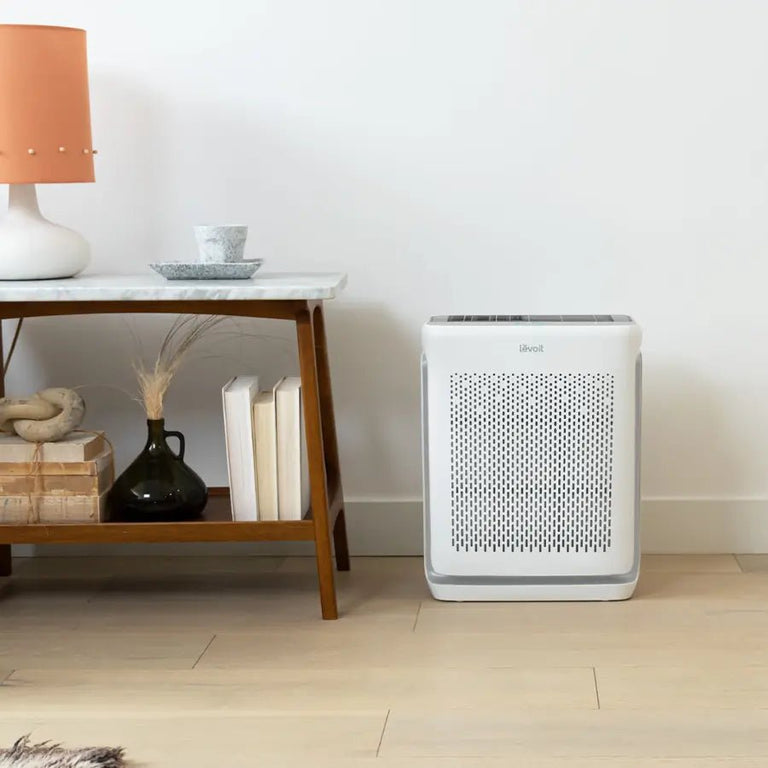
Direct answer: Understand what a portable air cleaner can do, how air moves through the unit, and where source control and ventilation still matter. That means a purifier is best understood as a room tool. It can support cleaner air in a bedroom, office, nursery, or living area when the unit is correctly sized, placed with clear intake and exhaust space, and operated long enough to process the room air. It cannot remove every source, clean a whole home from one corner, or replace fixing a leak, venting a cooking plume, or addressing smoke at its source.
A portable purifier cleans the air that passes through it, not every pollutant in the home.
Room fit depends on airflow and CADR, not just a large square-foot number.
Source control and ventilation remain part of a sensible indoor-air plan.
Filter condition, placement, and run time change real-world usefulness.
| Question | Practical answer |
|---|---|
| What does it remove? | Particles that reach the filter; gases and odors require a suitable carbon stage and still have limits. |
| Does it replace ventilation? | No. It is a supplement to source control and clean outdoor air. |
| What matters most? | Appropriate room sizing, airflow, filter condition, and a routine you will follow. |
| Is “HEPA” enough? | No. Confirm the complete unit, airflow, noise, replacement filter, and current manufacturer guidance. |
What is the short answer?
An air purifier works by pulling room air through one or more stages and returning treated air to the same space. A mechanical particle filter can capture a portion of airborne particles that enter the unit. A carbon stage may help with some odors and gases, but its performance depends on the media, the pollutant, and the amount of air that actually passes through it.
That means a purifier is best understood as a room tool. It can support cleaner air in a bedroom, office, nursery, or living area when the unit is correctly sized, placed with clear intake and exhaust space, and operated long enough to process the room air. It cannot remove every source, clean a whole home from one corner, or replace fixing a leak, venting a cooking plume, or addressing smoke at its source.
How does air move through a portable unit?
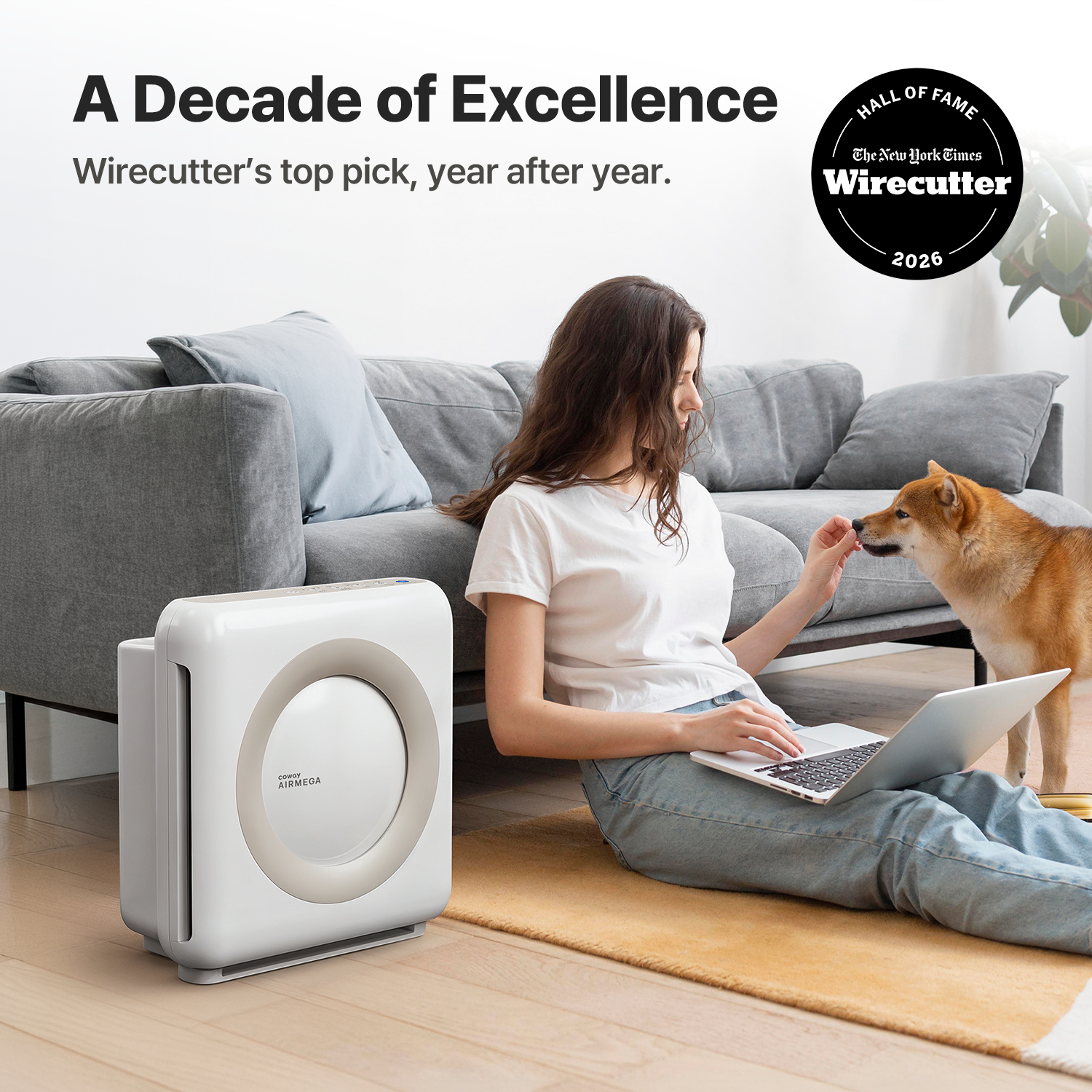
Most portable units have an intake, a pre-filter or first capture stage, a primary particle filter, and an exhaust. Some add carbon, an ionizing feature, a UV claim, or sensors. The exact order varies, so shoppers should read the current manual rather than assume that every product uses the same stack.
The useful mental model is circulation. The machine only acts on air that reaches the intake. Furniture, walls, closed doors, low fan settings, and a unit hidden behind a sofa can reduce how much room air reaches the filter. A smaller unit running constantly may be less useful for a large room than a better-sized unit running at a sustainable setting.
Why are particles, gases, and odors different problems?
Particle filtration and odor control are not interchangeable. Dust, pollen, dander, and smoke particles are handled by mechanical filtration when the particles enter the unit. Odors and some gases interact with sorbent media such as activated carbon, but the result depends on the chemical, the carbon amount, contact time, and how quickly the source is producing more odor.
If the concern is cooking smoke, the range hood and source control should come first. If the concern is wildfire smoke, a properly sized mechanical purifier can be a useful room-level supplement while windows and doors remain closed. If the concern is mold, the moisture problem still needs to be corrected; a purifier is not a mold-remediation plan.
Why do CADR and room sizing matter?
CADR is useful because it combines airflow with particle-removal performance for a test condition. EPA guidance provides estimation tables for room area and notes that the calculation assumes an eight-foot ceiling. A higher CADR generally supports a larger area or more air cleaning per hour, but the label should be interpreted with the room, ceiling height, and operating setting in mind.
Avoid comparing a large marketing coverage number from one brand with a tested CADR from another as if they were identical. Check the actual test basis, the fan setting, and the source of the number. For a room with a high ceiling, open doorway, or unusually heavy pollutant load, a conservative choice or more than one unit may be more realistic.
How do run time and maintenance change the result?
Run time matters because filtration is a repeated process. A unit that is switched off for most of the day cannot provide the same cumulative cleaning as one that runs at a quiet, sustainable setting. Higher settings may clean faster but may also create more noise and energy use, so the best setting is often the one people will actually keep running.
A loaded filter can restrict airflow and make the machine less useful. Follow the model-specific replacement and cleaning instructions, keep the intake clear, and do not wet a filter unless the manual explicitly says it is washable. A dirty pre-filter can change the sound and airflow before the main filter appears visibly exhausted.
What can a purifier not promise?
A purifier cannot guarantee that a room is free of allergens, viruses, smoke, or other pollutants. It cannot make an unsafe source safe, remove carbon monoxide, correct poor ventilation by itself, or diagnose a health condition. Claims should be read as performance under defined conditions, not as a promise about every home.
The most defensible buying decision combines source control, ventilation when appropriate, a correctly sized portable unit, and a maintenance routine. That approach is less dramatic than a universal “best” claim, but it is more useful for a real room and easier to verify after purchase.


What should you verify in practice?
Before buying or changing a setup, write down the room, the main concern, the operating schedule, and the result you are trying to improve. This simple record prevents a product page from becoming the entire decision. It also makes later troubleshooting easier because you can separate a room problem from a machine problem. If the purifier is moved, the door position changes, or a new source appears, note the change instead of treating the result as a permanent product verdict.
Check the current manufacturer manual, not only a retailer listing. Look for the exact model number, filter code, room assumptions, clearance instructions, sound information, control behavior, and replacement guidance. Product pages can change and marketplace listings can combine several variants under one title. A model-specific manual is the safer reference for installation and maintenance. If the manual is unavailable, treat that as a buying concern rather than filling the gap with a guess.
Separate what can be observed from what needs a controlled measurement. A quieter room, less visible dust, or a different smell may be useful household observations, but they do not prove that every pollutant has been removed. Consumer sensors can show trends and may be useful for troubleshooting, but they are not automatically a laboratory instrument. For health-related questions, keep the site’s guidance general and speak with a qualified professional about symptoms, diagnosis, or treatment.
Keep ownership in the calculation. A purifier that is difficult to place, noisy at the required setting, or expensive to maintain may not be a good fit even when its headline specification looks strong. Confirm that the replacement filter is available, that the power cord and controls suit the room, and that the device can run without blocking a walkway or creating a trip hazard. A sustainable routine is more valuable than an impressive specification that goes unused.
Finally, revisit the setup after the first maintenance cycle. Inspect the intake, filter condition, airflow, sound, and the source of the original concern. If the result is disappointing, test one change at a time: move the unit, change the operating schedule, address the source, or replace the filter when instructed. Do not silently convert an unverified household observation into a universal ranking. The responsible conclusion may be that the room needs a different intervention, a different size, or professional advice.
A useful final check is to compare the decision with the room you can actually maintain. Record the date, model, filter code, operating setting, placement, and any relevant source event. Recheck the same fields after a week and again after the first maintenance cycle. This does not create a laboratory result, but it creates a more honest ownership record and makes it easier to ask a manufacturer or qualified professional a precise question. It also keeps the review grounded: a product can be a reasonable fit for one room and routine while being a poor fit for another.
What questions do people ask most?
Do air purifiers use a lot of electricity?
Energy use depends on the model and setting. Compare the manufacturer’s power information and choose a setting that supports consistent use rather than relying only on the maximum fan speed.
Can one purifier clean my whole house?
Usually not as a portable-room strategy. Airflow between rooms is limited, and closed doors or separate floors change the result. Use room-by-room planning or an HVAC approach.
Does HEPA remove odors?
HEPA-style particle filters target particles. Odor reduction usually requires a suitable carbon stage and source control.
Should I leave a purifier on all night?
Many people choose a lower or sleep setting, but verify the manual, noise, display, and maintenance behavior for the exact model.
How do I know if it helps?
Track the problem you are trying to manage, the room, the operating schedule, and filter condition. A consumer sensor can show trends but is not a substitute for professional measurement.
Which sources help verify this?
Use these first-party sources to verify the general guidance. Product specifications, prices, availability, and safety instructions still need model-specific checking.