
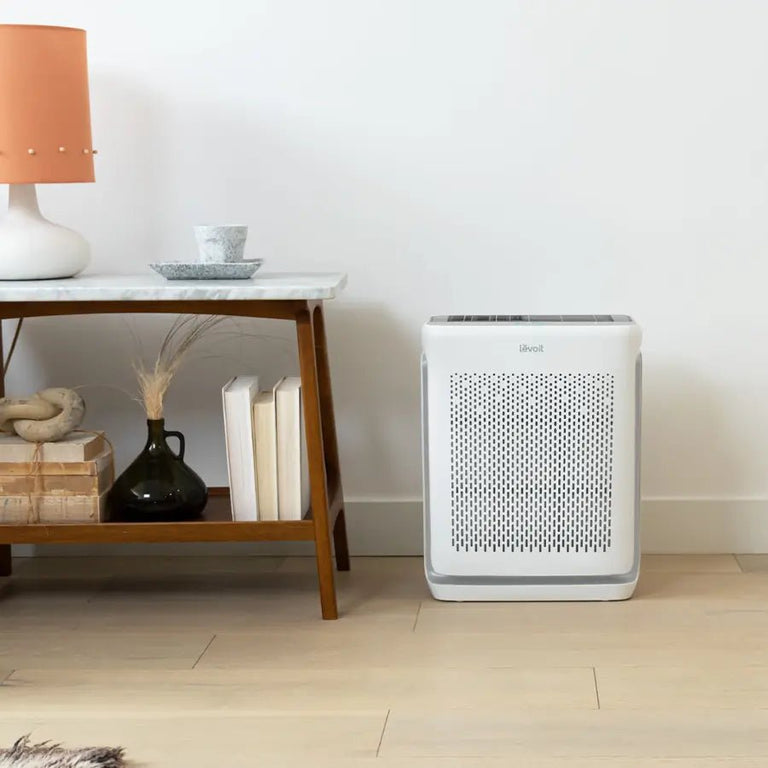
Direct answer: Use room area, ceiling height, CADR, doorways, and operating habits to choose a realistic purifier size. The most useful size is not necessarily the largest model. It is the model that can move enough air for the space while remaining quiet, affordable to maintain, and easy to place with clear intake and exhaust.
Measure the room you actually want to clean.
Use CADR or a comparable airflow metric where available.
Adjust expectations for tall ceilings, open doors, and heavy sources.
A unit that is quiet enough to run is often more useful than a maximum-output unit you avoid.
| Question | Practical answer |
|---|---|
| Room floor area | The starting point for estimating required airflow. |
| Ceiling height | A taller room contains more air than the same floor area with an eight-foot ceiling. |
| CADR or airflow | A more useful comparison than a vague maximum-room label. |
| Doorways and source load | Open layouts and continuing sources can reduce the effect of one portable unit. |
What is the short answer?
Size a purifier to the room where it will run, then compare the manufacturer’s current room guidance with CADR or airflow information. A 200-square-foot bedroom with an eight-foot ceiling is not the same air volume as a 200-square-foot room with a tall ceiling or an open doorway to a hallway.
The most useful size is not necessarily the largest model. It is the model that can move enough air for the space while remaining quiet, affordable to maintain, and easy to place with clear intake and exhaust.
How do you measure the real room?
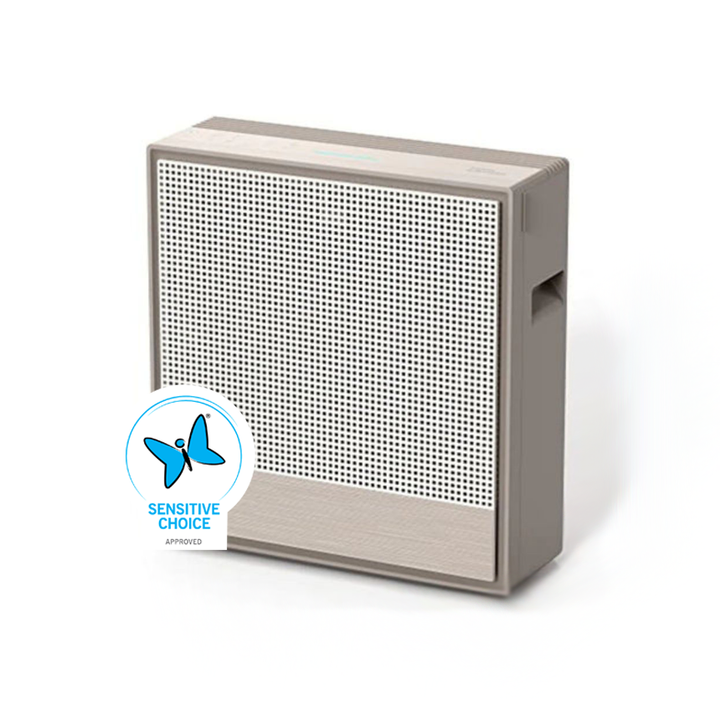
Measure length and width, then multiply to estimate floor area. If the room is irregular, divide it into simple rectangles and add them. Note ceiling height, open doorways, connected spaces, and whether the purifier will be moved between rooms. A product page may use a closed-room assumption that does not match your layout.
Also identify the source. A bedroom with seasonal pollen, a kitchen with cooking smoke, a basement with dampness, and a living room with pet hair may need different expectations even if the floor area is identical. Room size is necessary, but it is not the whole decision.
How do you use CADR as a sizing anchor?
EPA provides estimation tables for portable particle removal and notes that the table assumes an eight-foot ceiling. The exact target depends on the pollutant concern and the cleaning rate you want. When a product publishes CADR, use it as a comparison anchor rather than relying only on a brand’s largest advertised room size.
If CADR is not available, inspect the manufacturer’s room guidance, airflow information, filter design, and intended use. Do not create a false precision by converting an unclear marketing claim into an exact air-change number. State the uncertainty and choose conservatively when the room is open or the source is heavy.
How do you adjust for ceiling height and open plans?
A taller ceiling increases the air volume. An open plan also means the machine may be drawing from and returning air to a larger connected area. In those situations, a unit rated exactly to the floor area may be optimistic. A larger unit, multiple units, or a better placement may be more realistic.
Door position matters too. A purifier inside a closed bedroom is treating a different air mass than the same purifier beside an open door to a hallway. If you move one unit between rooms, size it around the largest or most demanding room only if you will actually use it there.
How do you balance output with noise and ownership cost?
Maximum output is only useful if you tolerate it. Compare sleep mode, fan steps, display brightness, filter cost, and the placement needed to keep the intake clear. A smaller purifier that runs consistently can be a better fit than a larger unit that is switched off.
Ownership cost also affects sizing. A large unit may have higher filter costs or a heavier footprint. A compact unit may be easier to maintain but require longer operation. Treat the purchase as a system: airflow, noise, filter replacement, electricity, and daily behavior.
What sizing checklist can you repeat?
Write down the room area, ceiling height, door status, main pollutant concern, preferred noise level, and budget for filters. Then compare two or three candidates using the same fields. This prevents a large headline number from dominating the decision.
After purchase, reassess the setup rather than assuming the label proves the result. Is the intake clear? Is the unit running? Is the filter available? Are you measuring a meaningful trend? These questions are more actionable than asking whether a purifier is “powerful” in the abstract.


What should you verify in practice?
Before buying or changing a setup, write down the room, the main concern, the operating schedule, and the result you are trying to improve. This simple record prevents a product page from becoming the entire decision. It also makes later troubleshooting easier because you can separate a room problem from a machine problem. If the purifier is moved, the door position changes, or a new source appears, note the change instead of treating the result as a permanent product verdict.
Check the current manufacturer manual, not only a retailer listing. Look for the exact model number, filter code, room assumptions, clearance instructions, sound information, control behavior, and replacement guidance. Product pages can change and marketplace listings can combine several variants under one title. A model-specific manual is the safer reference for installation and maintenance. If the manual is unavailable, treat that as a buying concern rather than filling the gap with a guess.
Separate what can be observed from what needs a controlled measurement. A quieter room, less visible dust, or a different smell may be useful household observations, but they do not prove that every pollutant has been removed. Consumer sensors can show trends and may be useful for troubleshooting, but they are not automatically a laboratory instrument. For health-related questions, keep the site’s guidance general and speak with a qualified professional about symptoms, diagnosis, or treatment.
Keep ownership in the calculation. A purifier that is difficult to place, noisy at the required setting, or expensive to maintain may not be a good fit even when its headline specification looks strong. Confirm that the replacement filter is available, that the power cord and controls suit the room, and that the device can run without blocking a walkway or creating a trip hazard. A sustainable routine is more valuable than an impressive specification that goes unused.
Finally, revisit the setup after the first maintenance cycle. Inspect the intake, filter condition, airflow, sound, and the source of the original concern. If the result is disappointing, test one change at a time: move the unit, change the operating schedule, address the source, or replace the filter when instructed. Do not silently convert an unverified household observation into a universal ranking. The responsible conclusion may be that the room needs a different intervention, a different size, or professional advice.
A useful final check is to compare the decision with the room you can actually maintain. Record the date, model, filter code, operating setting, placement, and any relevant source event. Recheck the same fields after a week and again after the first maintenance cycle. This does not create a laboratory result, but it creates a more honest ownership record and makes it easier to ask a manufacturer or qualified professional a precise question. It also keeps the review grounded: a product can be a reasonable fit for one room and routine while being a poor fit for another.
What questions do people ask most?
What CADR should I look for?
Use current EPA sizing guidance and the manufacturer’s data for the exact room. The needed CADR depends on floor area, ceiling height, pollutant concern, and desired cleaning rate.
Can I use a small purifier in a large room?
You can, but the cleaning rate may be lower than you expect. Be honest about the room and operating setting.
Should I size by the whole apartment?
A portable purifier is usually a room-level tool. Size it to the room where it will operate, or plan multiple units.
Does a higher square-foot rating always mean better?
No. Ratings can use different assumptions. Compare CADR, fan settings, noise, filter cost, and the test basis.
Does ceiling height really matter?
Yes. Taller ceilings increase air volume, so floor area alone can understate the task.
Which sources help verify this?
Use these first-party sources to verify the general guidance. Product specifications, prices, availability, and safety instructions still need model-specific checking.