
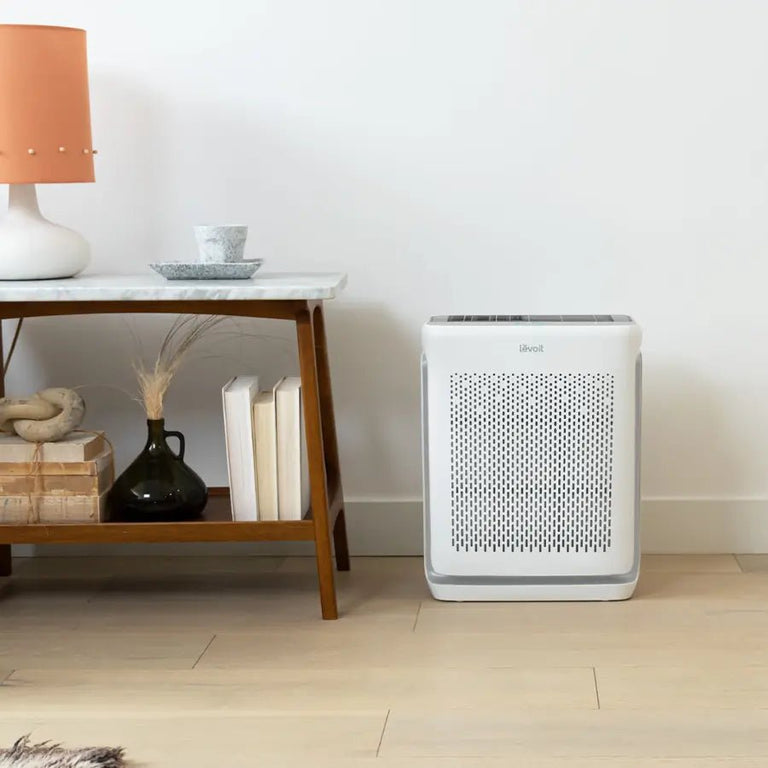
Direct answer: A purifier may reduce some airborne particles in a room, but allergy control also depends on source reduction, cleaning, ventilation, and medical care. It is not a cure and it does not remove allergens that have settled into bedding, carpets, furniture, or clothing. Allergy management may require source control, cleaning, ventilation choices, and advice from a qualified clinician.
A purifier can support particle reduction in the air that reaches its filter.
It does not remove every allergen from bedding, carpets, surfaces, or the body.
Room sizing, placement, and run time determine how much air is processed.
Use a purifier as one layer, not as a medical promise.
| Question | Practical answer |
|---|---|
| Can an air purifier stop allergies? | No. It may reduce some airborne particles in a room, but it cannot remove every allergen or replace medical care. |
| Is HEPA required for allergies? | A credible particle filter and suitable airflow are important. Confirm the exact unit and current manufacturer information. |
| Where should I place it for pet dander? | Use an open, occupied room location with clear intake and exhaust, while continuing surface cleaning and source control. |
| Should I run it all day? | Consistent operation at a tolerable setting can process more air than occasional bursts. Follow the manual and your household needs. |
What is the short answer?
An appropriately sized air purifier may help reduce airborne particles in a room, including some particles associated with pollen, dust, and pet dander. The effect depends on the unit, the room, how long it runs, and how much allergen is being generated or resuspended.
It is not a cure and it does not remove allergens that have settled into bedding, carpets, furniture, or clothing. Allergy management may require source control, cleaning, ventilation choices, and advice from a qualified clinician.
How do airborne and settled allergens differ?
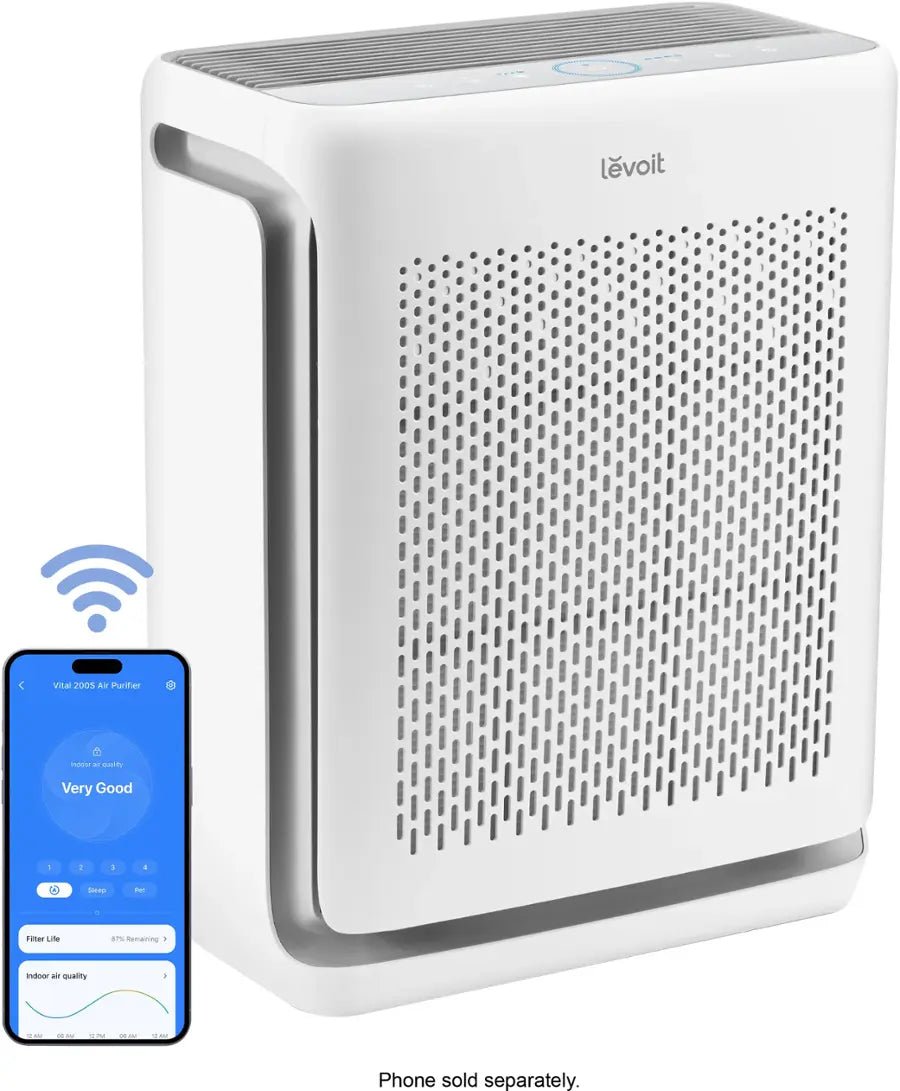
A purifier only acts on air that passes through it. Pollen or dander on a floor, mattress, sofa, or curtain is not automatically removed because a machine is running nearby. Movement, cleaning, pets, and HVAC airflow can resuspend particles, but the timing and amount vary.
This is why placement and room routine matter. In a bedroom, focus on the occupied zone and keep the unit running consistently at a tolerable setting. Pair it with washing bedding, reducing dust reservoirs, and following the advice that applies to the person’s symptoms.
Why choose for the room, not a diagnosis?
A product should not be selected by a medical label alone. Compare room fit, particle filtration, airflow, noise, filter cost, and maintenance. If the purifier is too small or too loud to run, the label “allergy” does not fix the mismatch.
Look for current manufacturer information and evidence from credible independent sources. Avoid claims that a consumer purifier can diagnose, prevent, or treat a disease. Use health language carefully and keep the purchase decision focused on room-level filtration.
How do pets and dust change pre-filter maintenance?
Pet homes may produce hair and larger debris that load a pre-filter before the primary particle filter. A unit with accessible pre-filter maintenance can be easier to live with, but the exact design matters. Hair removal, floor cleaning, and fabric care still reduce the source load.
If the purifier becomes noisy or airflow drops, inspect the intake and pre-filter first. A clogged pre-filter can change the entire system’s behavior. Do not assume that a larger machine is automatically easier to maintain.
What matters for bedrooms and nighttime use?
A bedroom purifier may be most useful when it can run during the hours people occupy the room. Compare sleep mode, display brightness, fan sound, and the ability to keep the intake clear. A quiet, consistent schedule can be more practical than short bursts at maximum output.
Avoid placing the unit where airflow is uncomfortable or where the cord creates a trip hazard. If symptoms are severe, persistent, or changing, the purifier should not delay professional medical advice.
What does a layered allergy plan look like?
Use source control first when possible: reduce dust reservoirs, address moisture, manage pet access, and ventilate appropriately. Add a correctly sized purifier to support particle reduction in the target room. Track whether the room feels more comfortable without claiming that the machine proves a medical result.
The most useful review tells readers what is known, what is uncertain, and what remains untested. That is especially important for health-adjacent products, where overpromising can create false confidence.


What should you verify in practice?
Before buying or changing a setup, write down the room, the main concern, the operating schedule, and the result you are trying to improve. This simple record prevents a product page from becoming the entire decision. It also makes later troubleshooting easier because you can separate a room problem from a machine problem. If the purifier is moved, the door position changes, or a new source appears, note the change instead of treating the result as a permanent product verdict.
Check the current manufacturer manual, not only a retailer listing. Look for the exact model number, filter code, room assumptions, clearance instructions, sound information, control behavior, and replacement guidance. Product pages can change and marketplace listings can combine several variants under one title. A model-specific manual is the safer reference for installation and maintenance. If the manual is unavailable, treat that as a buying concern rather than filling the gap with a guess.
Separate what can be observed from what needs a controlled measurement. A quieter room, less visible dust, or a different smell may be useful household observations, but they do not prove that every pollutant has been removed. Consumer sensors can show trends and may be useful for troubleshooting, but they are not automatically a laboratory instrument. For health-related questions, keep the site’s guidance general and speak with a qualified professional about symptoms, diagnosis, or treatment.
Keep ownership in the calculation. A purifier that is difficult to place, noisy at the required setting, or expensive to maintain may not be a good fit even when its headline specification looks strong. Confirm that the replacement filter is available, that the power cord and controls suit the room, and that the device can run without blocking a walkway or creating a trip hazard. A sustainable routine is more valuable than an impressive specification that goes unused.
Finally, revisit the setup after the first maintenance cycle. Inspect the intake, filter condition, airflow, sound, and the source of the original concern. If the result is disappointing, test one change at a time: move the unit, change the operating schedule, address the source, or replace the filter when instructed. Do not silently convert an unverified household observation into a universal ranking. The responsible conclusion may be that the room needs a different intervention, a different size, or professional advice.
A useful final check is to compare the decision with the room you can actually maintain. Record the date, model, filter code, operating setting, placement, and any relevant source event. Recheck the same fields after a week and again after the first maintenance cycle. This does not create a laboratory result, but it creates a more honest ownership record and makes it easier to ask a manufacturer or qualified professional a precise question. It also keeps the review grounded: a product can be a reasonable fit for one room and routine while being a poor fit for another.
What questions do people ask most?
Can an air purifier stop allergies?
No. It may reduce some airborne particles in a room, but it cannot remove every allergen or replace medical care.
Is HEPA required for allergies?
A credible particle filter and suitable airflow are important. Confirm the exact unit and current manufacturer information.
Where should I place it for pet dander?
Use an open, occupied room location with clear intake and exhaust, while continuing surface cleaning and source control.
Should I run it all day?
Consistent operation at a tolerable setting can process more air than occasional bursts. Follow the manual and your household needs.
Can a purifier remove mold?
It may filter some airborne particles but cannot correct moisture or remediate mold contamination.
Which sources help verify this?
Use these first-party sources to verify the general guidance. Product specifications, prices, availability, and safety instructions still need model-specific checking.